The Maryland State Safety Inspection for cars and trucks is required when registering a vehicle in the state of Maryland. This applies to new vehicles, used vehicles in a new owner’s name, or registering a vehicle previously out of state. The MD state safety inspection is to ensure your vehicle is safe for the road and only needs to be completed once for your registration.
Many drivers are concerned about their tires when prepping for the MD state safety inspection. If your tires fail to pass the inspection, the vehicle cannot be registered until new tires are installed and the car is reinspected.
To avoid the hassle of investing in new tires if you don’t need to, or failing unexpectedly when trying to register your vehicle, find out what the safety inspection is actually checking for and how to prepare your car to pass.
Hoffmaster’s Auto Care in Silver Spring, MD is a certified MD state inspection station, and we can assist with tire inspection, replacement, and repairs if needed. Call today to learn more or schedule your inspection appointment.
Do I Need to Replace My Tires Before the MD State Safety Inspection
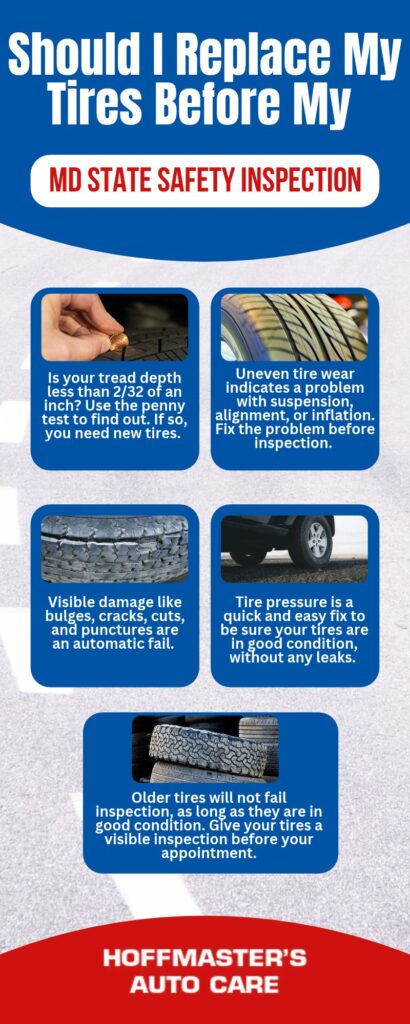
The Maryland auto safety inspection checks the condition of your tires for road safety, including tread depth, bulges, cracks, and overall quality. To check your tires, look for:
- Tread depth less than 2/32 of an inch
- Visible structure damage
- Deep sidewall cracks
- Exposed cords
- Bulges
These will all automatically fail the MD state safety inspection, and you will likely need new tires installed and to have your car reinspected.
How To Check Your Tires Before an MD State Inspection
1) Tire Tread Depth
If any major groove in your tire has less than 2/32 inch of remaining tread, your vehicle will fail the safety inspection. The easiest way to check your tread depth at home is with the penny test. Place a penny upside down into the tread with Abraham Lincoln’s head facing down. If you can see the top of his head, your tread is below 2/32 inch, and you will need a tire replacement before the safety inspection. A mechanic can also visually inspect your tires.
2) Tire Wear
Even if your tread is at the right height, extreme tire wear can be considered unsafe for the roads and will likely fail. Check the surface of each tire and be sure your tires are wearing evenly. If you notice the inner or outer sides of the tire are wearing differently, or if some tires are more worn than others, you may need a tire replacement or a repair to fix the underlying cause. Your car may be out of alignment, there could be improper tire inflation, suspension issues, or even worn steering components. An auto shop near you can diagnose what is going on if you notice uneven tire wear when inspecting your tires.
3) Cracks, Bulges, and Damages
Check the sidewalls of your tires for visible damage. Cracks, bulges, cuts, punctures, or other visible damage could be considered unsafe and cause the inspection to fail. Replacing damaged tires is the safest way to ensure you pass the inspection. It will also keep you safer on the road.
4) Tire Pressure
Check the tire pressure to ensure you are meeting the recommended guidelines for your vehicle. Improper inflation, either too much or too little, can cause issues with handling, tire life, and even gas mileage. It may also be a reason for a mechanic to fail the vehicle on the safety inspection. Reinflating tires is quick and easy, so always do so before your inspection. You can visit most gas stations for free air and tire pressure gauge readings.
5) Age and Condition
Older tires are more likely to incur damage, like cracks, bulges, and leaks. While the MD state safety inspection does not look at tire age specifically, you want to consider what condition your tires are in, regardless of their age. Tires that look old and worn could be a safety concern, so always be sure that old tires are performing well and are in good condition.
When to Replace Your Tires: Before or After Inspection
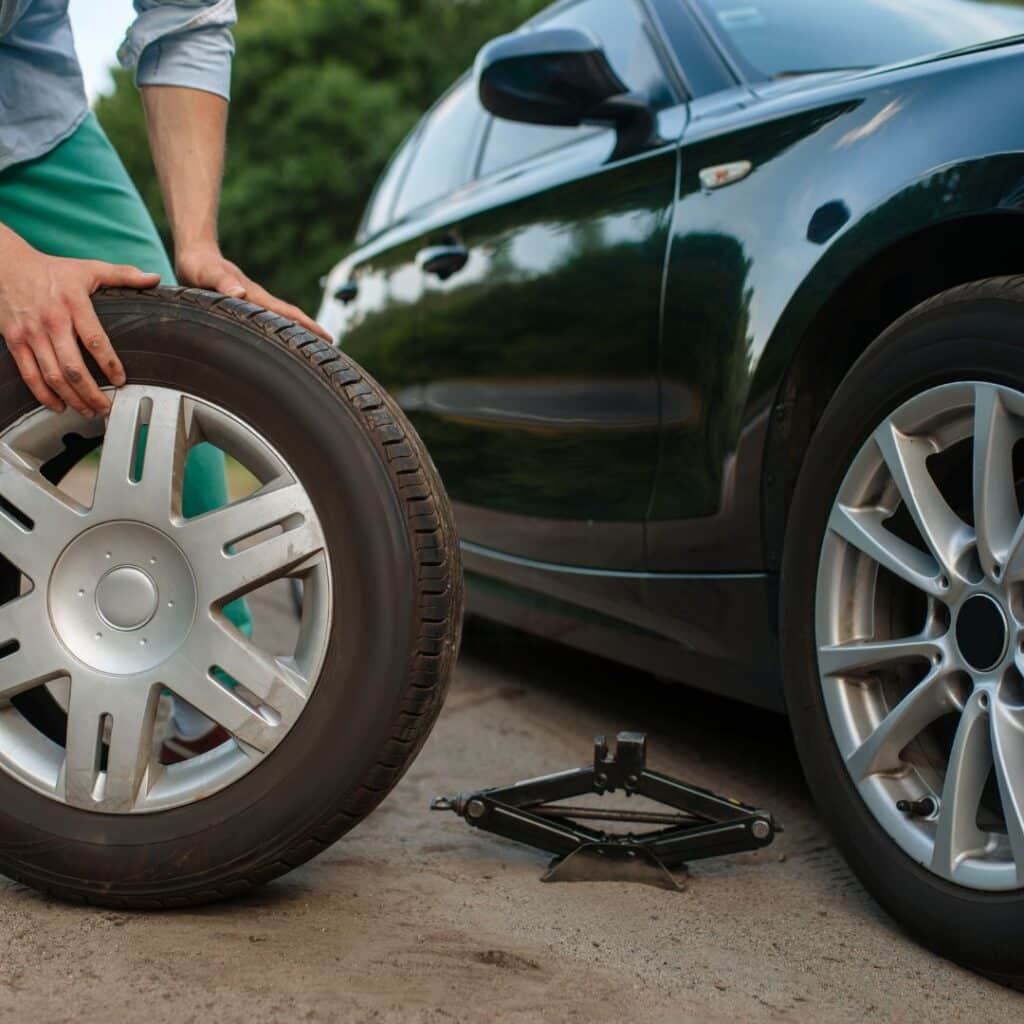
Replace your tires before inspection if:
- Your tread is very low
- You can see wear or damage
- The tires have bulges, significant cracks, or other visible damage
- The tires are wearing unevenly
- A mechanic has already recommended replacement
- You are concerned the tires may not meet inspection requirements
You can wait on a tire replacement if:
- The tires have adequate tread
- Wear is relatively even
- There is no significant sidewall or tread damage
- They are properly inflated
- A qualified technician confirms they’re still in good condition
What If I Fail the Safety Inspection for Bad Tires
You have 30 days to either get your vehicle inspected elsewhere or to replace the tires and have the vehicle reinspected. Some inspection stations will not charge you a reinspection fee if you return after fixing the repairs or damages. Talk with your mechanic about their recommendations and see if they offer tire replacements and installations on-site. It is always best to replace and repair any failure points, so you know your car is safe and road legal.
Preparing the Rest of Your Vehicle
Tires are only one item that is checked during an MD safety inspection. You also need to consider items like seatbelts, the horn, lights, airbags, and more. Our MD auto inspection checklist can help you prepare and review your car for any safety issues. Remember, the auto inspection is to ensure a safe vehicle, so investing in repairs is the wisest course of action. See our top 5 tips to pass inspection the first time and the 7 most common reasons cars fail.
At Hoffmaster’s Auto Care, we can assist with pre-inspections, repairs, consults, and more. We are a certified inspection station and can help you with anything you need to get your car ready for registration. Call today to set up your appointment.
Frequently Asked Questions
Do I need new tires to pass a Maryland safety inspection?
New tires are not required for the Maryland safety inspection. However, tires must be in safe condition and meet Maryland’s inspection requirements. A technician will check the tread, tire condition, wear patterns, and other potential problems, so make sure your tires are safe and meet the requirements.
How much tread do tires need to pass Maryland inspection?
Tread depth less than 2/32 of an inch will fail the Maryland safety inspection. Do the penny test to check your tread depth or schedule a pre-inspection to check everything before your official state inspection.
Can worn tires cause you to fail a Maryland inspection?
Yes. Tires that are excessively worn, damaged, or otherwise unsafe can result in a failed Maryland safety inspection. If you’re concerned about your tires, consider having them checked before the official inspection so you can address potential problems ahead of time.
Should I replace my tires before a Maryland State Inspection?
If your tires are significantly worn, damaged, cracked, or wearing unevenly, a new tire replacement is a good idea to ensure you pass the MD inspection and to ensure your vehicle is in good condition. An appointment with a local mechanic can help determine if new tires are worth the investment before your safety inspection.
What tire problems can cause a Maryland safety inspection failure?
If your tires have excessive tread wear, significant tire damage, exposed or damaged areas, bulges, severe cracking, or other conditions that make the tire unsafe, you may fail the inspection. Uneven tire wear can also indicate an alignment, suspension, or inflation problem that should be checked.
Can I get my tires checked before a Maryland safety inspection?
Yes. Many Maryland auto repair and tire shops can perform a tire and vehicle safety check before your official inspection. This can help identify worn tires, improper tire pressure, uneven wear, or other problems that may need attention before the inspection.

Hoffmaster's Auto Care
Our mission at Hoffmaster’s Auto Care is to provide our customers with the highest level of car repair service and expertise, delivered with honesty, integrity, and a commitment to excellence. Hoffmaster’s Auto Care in Silver Spring, MD has been in business for more than 40 years. All our technicians are ASE certified. You can rely on our experience and knowledge for high-quality auto repair and maintenance services.
- Hoffmaster's Auto Care
- Hoffmaster's Auto Care
- Hoffmaster's Auto Care
- Hoffmaster's Auto Care
- Hoffmaster's Auto Care
- Hoffmaster's Auto Care
- Hoffmaster's Auto Care
- Hoffmaster's Auto Care
- Hoffmaster's Auto Care
- Hoffmaster's Auto Care
- Hoffmaster's Auto Care
- Hoffmaster's Auto Care
- Hoffmaster's Auto Care
- Hoffmaster's Auto Care
- Hoffmaster's Auto Care
- Hoffmaster's Auto Care
- Hoffmaster's Auto Care
- Hoffmaster's Auto Care
- Hoffmaster's Auto Care
- Hoffmaster's Auto Care
- Hoffmaster's Auto Care
- Hoffmaster's Auto Care
- Hoffmaster's Auto Care
- Hoffmaster's Auto Care
- Hoffmaster's Auto Care
- Hoffmaster's Auto Care
- Hoffmaster's Auto Care
- Hoffmaster's Auto Care
- Hoffmaster's Auto Care
- Hoffmaster's Auto Care
- Hoffmaster's Auto Care
- Hoffmaster's Auto Care
- Hoffmaster's Auto Care
- Hoffmaster's Auto Care
- Hoffmaster's Auto Care
- Hoffmaster's Auto Care
- Hoffmaster's Auto Care
- Hoffmaster's Auto Care
- Hoffmaster's Auto Care
- Hoffmaster's Auto Care
- Hoffmaster's Auto Care
- Hoffmaster's Auto Care
- Hoffmaster's Auto Care
- Hoffmaster's Auto Care